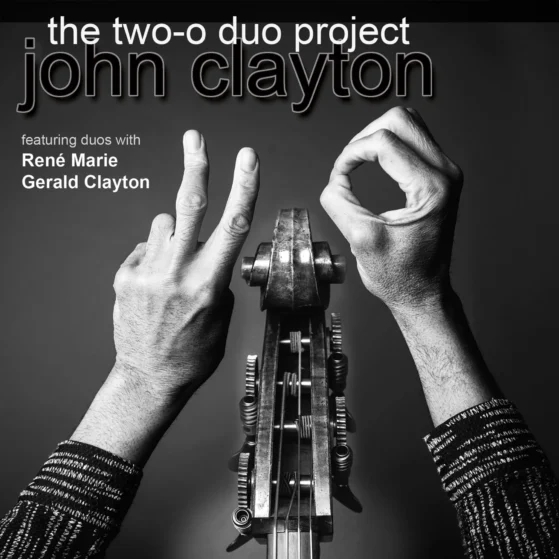
the two-o-duo project
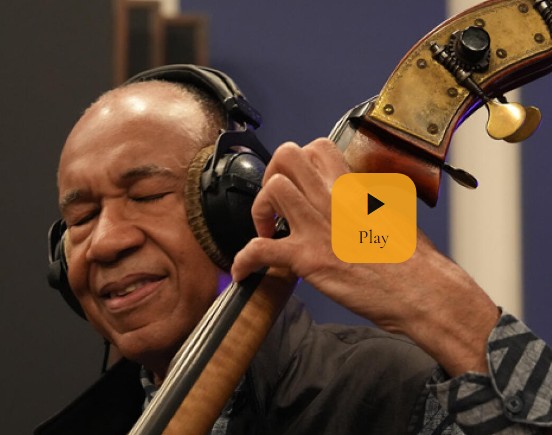
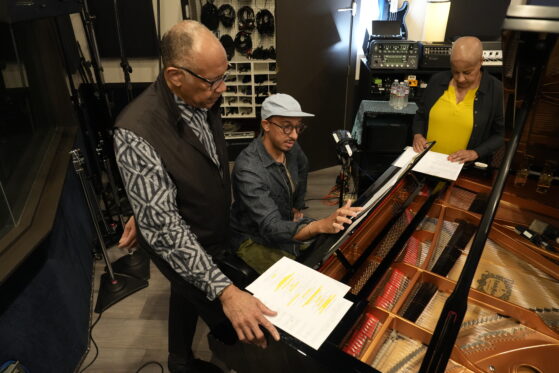
On May 15, 2026, Grammy Award-winning bassist, composer, arranger, and educator John Clayton released **Two-o Duo**, his eighth album as a leader on ArtistShare. At its heart is an intimate musical conversation between three artists who have spent decades listening to, learning from, and inspiring one another: acclaimed vocalist René Marie, whose fearless storytelling has long defined her artistry, and seven-time Grammy-nominated pianist and composer Gerald Clayton, John's son and one of today's most inventive musical voices. Centered primarily around the art of the duo, **Two-o Duo** presents eleven performances that move effortlessly across genres, generations, and emotional landscapes. The repertoire includes beloved standards, popular songs, original compositions by John and Gerald Clayton, and deeply personal lyrics by René Marie. Although the album celebrates the intimacy of two musicians in conversation, Clayton embraced the opportunity to expand the dialogue whenever inspiration called. "Since we were all together in the studio," Clayton recalls, "why not record a few trio performances as well?" Those spontaneous moments became some of the album's most compelling. Throughout the recording, the trio demonstrates remarkable trust—knowing when to fill the silence, when to leave space, and when to allow each note to resonate naturally. "Some really magical things happened," says Clayton. "When you're close with someone and you're in the room together, there's something you both feel that can't really be explained. It's intangible, but it's absolutely real." As the project began taking shape, Clayton encouraged Marie to choose songs that reflected her own musical journey rather than simply assembling a traditional jazz repertoire. Her selections reveal an artist whose influences stretch far beyond jazz, embracing the popular music that surrounded her throughout life. "René has always loved songs from everywhere," Clayton explains. "She'll hear something she remembers from AM radio or a pop classic, live with it for a while, and then bring it to her band. That's always been part of who she is, and I've always admired that." The album opens with a striking reimagining of Roy Orbison's "Blue Bayou." Rather than honoring the familiar, the trio reinvents the song with an intentionally off-center rhythmic feel that Clayton affectionately describes as "a cart that's missing a wheel." The unusual groove remains intact throughout—even during Gerald Clayton's adventurous solo—creating a performance that feels both playful and emotionally suspended. Gerald's original blues composition, **"Nail… In Need,"** further strengthens the album's family connection. After hearing Gerald perform the piece live, family friend and legendary drummer Jeff "Hammer" Hamilton was so captivated that he later recorded it with his own trio. René Marie's interpretive gifts shine throughout the recording. On **"Beautiful,"** she gradually transforms quiet reflection into powerful testimony, revealing new emotional layers with every verse. That same depth carries into **"On the Day You Were Born,"** an original collaboration born from Marie's deeply personal lyrics. Inspired by her text, John and Gerald each contributed musical ideas that allowed the story to unfold organically. The trio recorded a single take. "When we listened back," Clayton remembers, "I said, 'We could do another take, but it won't be better. It'll only be different.' So we left it exactly as it was." The album's emotional range continues with **Martin Rojas' "En La Orilla del Mundo,"** a heartfelt tribute to Charlie Haden. Beginning as a delicate piano-and-arco bass duet, John and Gerald approach the beloved melody with extraordinary tenderness and restraint. "It's one of those songs I'm jealous I didn't write," Clayton laughs. "I don't know what I'm capable of writing, but I wish I could have written something that beautiful." Billy Joel's **"For the Longest Time"** becomes an intimate exchange between bass and voice, while the joyful **"Smile Medley"** seamlessly weaves together "When You're Smiling," "Smile," "Make Someone Happy," and a gentle nod to "Put on a Happy Face." Although Marie selected the repertoire, the arrangement emerged through the collective creativity of the ensemble, illustrating the shared spirit that defines the entire album. That collaborative philosophy continues on **"Some Other Time,"** where Clayton crafts the rhythmic sensation of a samba without using percussion. "I feel Rio in the air on this one," he says. "It's a samba, but we allow the listener to provide the drums." Duke Ellington's **"Come Sunday"** unfolds with quiet reverence as John's bowed bass introduces Gerald's richly orchestral piano textures. Clayton notes how the gradual arrival of Gerald's accompaniment transforms the emotional landscape, filling spaces that initially remain intentionally bare. The album's contemplative reading of **"Somewhere Over the Rainbow"** begins and ends in free rubato, inspired by Marie's expressive treatment of the rarely performed verse. "René knows how to invite freedom and inspire creativity," Clayton reflects. "It's what every artist wants to bathe in." The recording concludes with Gerald's original composition **"Forth,"** a remarkable duo that layers piano, keyboards, and John's bass into an expansive sonic landscape. "I didn't fully understand the piece while we were recording," Clayton admits. "It wasn't until the final mix that I heard how everything fit together. It felt like opening a gift." Dedicated to the memory of beloved recording engineer Joel Moss, **Two-o Duo** ultimately becomes more than a collection of performances. It is a meditation on trust, family, friendship, and the invisible bonds that exist between musicians—and between artists and audiences. "There's always something spiritual about people who are connected," Clayton says. "Sometimes it's family, sometimes it's lifelong friendship. René and I may not be related, but we're sharing something real. The audience may not know exactly what's happening, but they'll feel it. That's what music does."